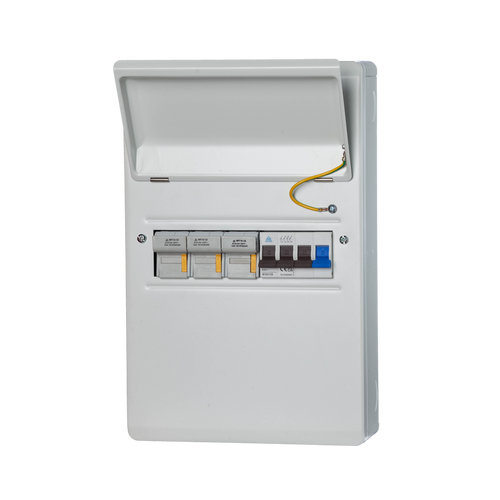
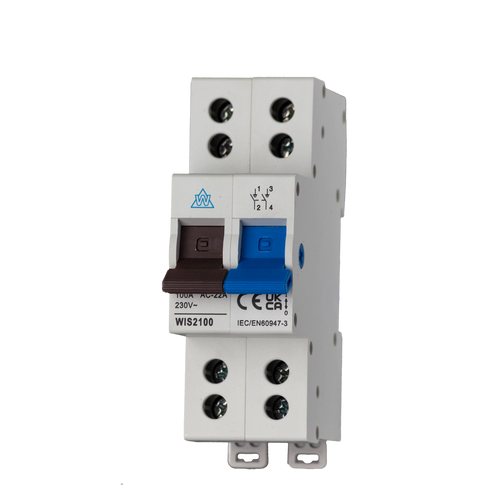
Main Switches & Rotary Isolator Switches
Main switches and rotary isolator switches provide a safe point of disconnection for consumer units, sub-mains, EV chargers, garage supplies, outdoor circuits and machinery. This range includes DIN-rail main switches, local isolators and rotary isolators for single-phase and three-phase electrical installs.
Use a main isolator switch where the board or circuit needs a clear means of isolation. Use a rotary isolator where local, visible disconnection is required near equipment such as motors, HVAC units, garages, workshops or EV charging points.
Quick answer: A main switch is normally used inside a consumer unit or distribution board to isolate the supply. A rotary isolator switch is usually a standalone local isolator used beside equipment, outdoor supplies, machinery or EV chargers.
Read more
Choose the isolator type based on the supply, current rating, pole configuration, mounting location and whether the device needs to be fitted inside a board or in a separate enclosure. Common options include 32A isolator switches, 100A main switches, 2 pole rotary isolators and 3 phase rotary isolators.
- Main switches – DIN-rail mounted isolation for consumer units and boards
- Rotary isolators – local visible isolation for equipment and outdoor circuits
- Single-phase and three-phase options – choose the correct pole configuration for the supply
- Garage, EV and machinery isolation – suitable for common trade installs
Need isolation between the electricity meter and consumer unit? View our meter isolator switches. For related housings, browse electrical enclosures.
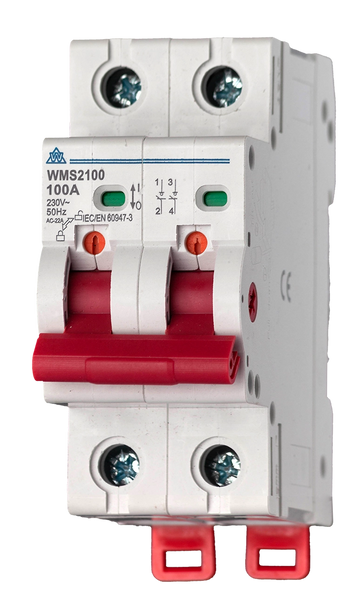
2 Pole 100A Main Switch
£6.70
The WMS2100 2 Pole 100A Main Switch is a BS EN 60947-3 compliant main switch isolator designed for safe isolation of single-phase electrical supplies. It is suited to consumer units, distribution boards and other switchgear where a dependable double pole main switch is required. Rated...
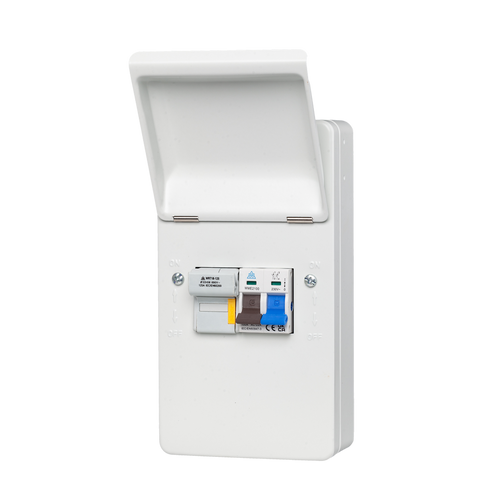
Metal Fuse Switch 100A with Fuseholder (WFMS100)
£29.99
The WFMS100 is a 100 A metal fuse switch with 22 × 58 fuseholder, designed for safe mains isolation and over-current protection between the meter and consumer unit. Housed in a heavy-duty steel enclosure, it provides a clean, compliant solution for domestic incomers, garage feeds,...
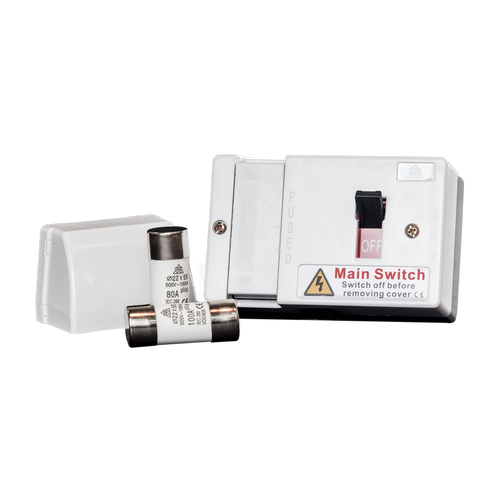
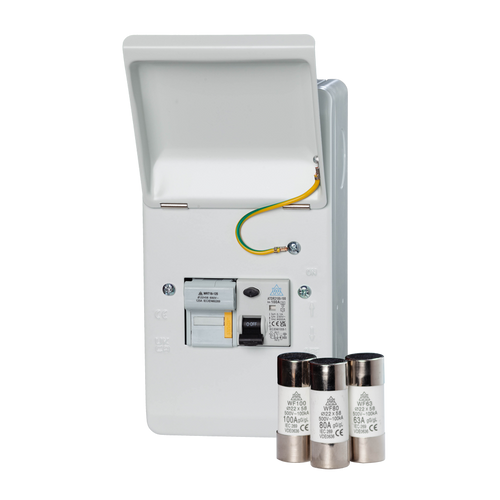
Fused Main Switch - WFIS100
£14.54
The WFIS100 is a compact, insulated fused main switch rated at 100A AC21 - designed for safe isolation and protection of incoming supplies. Supplied with both 80A and 100A general-purpose fuses, this unit is ideal for consumer unit upgrades, EV installs, and sub-main distribution boards....
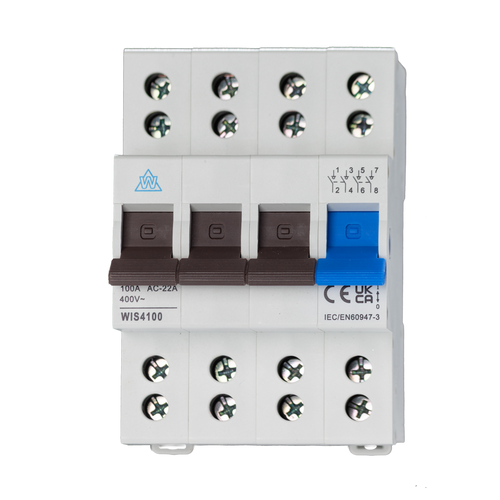
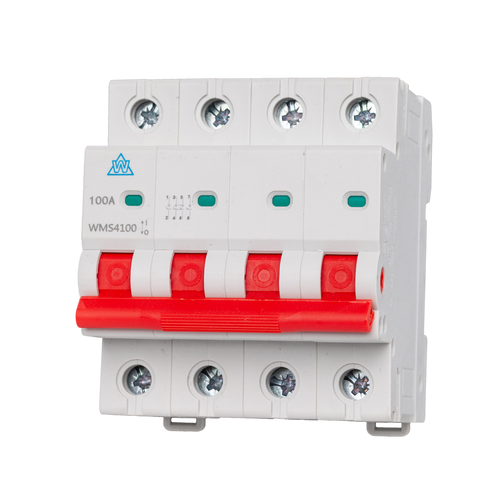
Twin Screw 100A Main Switch 4 Pole WIS4100
£18.75
£31.26
The WIS4100 is a robust 4 pole 100A main switch with twin screw terminals for secure, reliable clamping. Designed for isolating circuits in both domestic consumer units and three-phase distribution boards, it ensures safe disconnection fully in line with the 18th Edition Wiring Regulations. Compact...
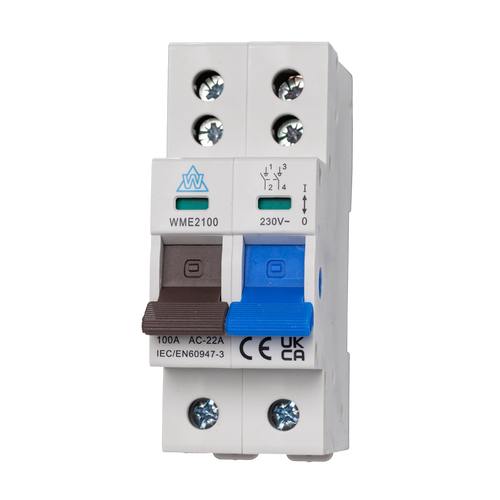
Twin Screw Main Switch for Consumer Units - 2 Pole 100A Double Terminal WME2100
£6.08
£10.13
The WME2100 is a 2 Pole 100A main switch designed for use in metal or plastic consumer units. Featuring twin screw terminals for a solid mechanical connection, it ensures safe and reliable isolation of incoming mains supply. Compact and easy to fit, it’s ideal for...
Main Switches vs Rotary Isolators
Main switches and rotary isolators are both used for isolation, but they usually sit in different parts of the installation. A main switch is typically fitted inside a consumer unit or distribution board. A rotary isolator is usually fitted locally beside the equipment or circuit it serves.
| Product Type | Typical Location | Common Use |
|---|---|---|
| Main switch | Consumer unit or distribution board | Board isolation and main incoming switching |
| Rotary isolator switch | Near equipment or local circuit position | Machinery, EV chargers, garages, HVAC and outdoor supplies |
| Mains isolator switch | Main supply or sub-main position | Safe disconnection before work or maintenance |
Common Uses for Isolator Switches
An isolator switch gives electricians and maintenance teams a clear point of disconnection before work is carried out. The right device depends on the circuit, current rating, phase type and mounting location.
- Consumer units – main switches for board isolation
- Garage supplies – local isolators for garage boards and outbuildings
- EV chargers – EV isolator switches where local disconnection is required
- Machinery and HVAC – rotary isolators for motors, fans and plant equipment
- Sub-mains – main isolators for secondary distribution circuits
- Outdoor circuits – IP-rated isolators where external mounting is needed
Choosing the Right Rotary Isolator Switch
When choosing a rotary isolator switch, check the current rating, pole configuration, enclosure rating and whether the circuit is single-phase or three-phase. A 32A isolator switch may be suitable for smaller local circuits, while larger loads may need higher-rated devices.
- 32A isolator switches – commonly used for local equipment isolation
- 2 pole rotary isolators – typically used on single-phase supplies
- 3 phase rotary isolators – used on three-phase equipment and commercial supplies
- Outdoor isolator switches – check the IP rating before external installation
- Fused rotary isolators – useful where isolation and fuse protection are required in one unit
Main Isolator Switches for Consumer Units
A main isolator switch is normally fitted as the main incoming switch within a consumer unit or distribution board. It allows the board to be safely isolated before inspection, testing, maintenance or replacement work.
For isolation between the electricity meter and consumer unit, use the dedicated meter isolator switch range rather than a standard board-mounted main switch.
EV, Garage and Outdoor Isolation
Rotary isolators are often specified where a local point of isolation is needed away from the main board. This includes EV charger isolator switches, garage isolator switches, workshop supplies and outdoor equipment.
For EV-specific board protection, browse our EV-ready consumer units, PEN fault detection devices and EV surge protection boards.
Main Switch and Rotary Isolator FAQs
What is a main switch?
A main switch is a switching device used to isolate the supply to a consumer unit or distribution board.
What is a rotary isolator switch?
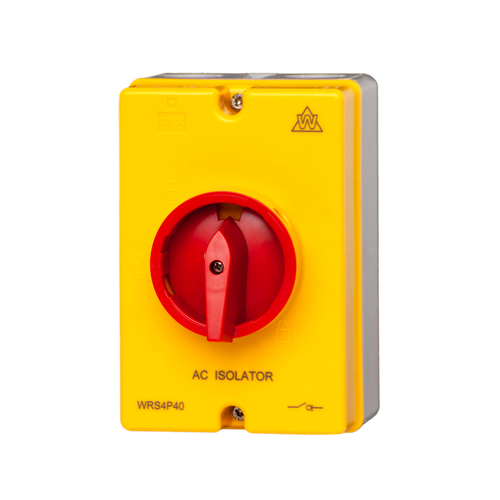
A rotary isolator switch is a local isolation device with a rotary handle, commonly used beside equipment, machinery, outdoor circuits, EV chargers and garage supplies.
What is the difference between a main switch and an isolator?
A main switch is usually board-mounted. An isolator can be board-mounted or standalone, depending on the circuit and location.
Can I use a rotary isolator for an EV charger?
Yes, a rotary isolator may be used where local isolation is required for an EV charger circuit. The full protection setup should match the charger, circuit design and installation requirements.
What size isolator switch do I need?
The isolator rating should match the supply, load and circuit design. Common options include 32A isolator switches for local circuits and higher-rated switches for main or sub-main isolation.
Do I need a 2 pole or 3 phase rotary isolator?
2 pole isolators are commonly used on single-phase supplies. Three-phase rotary isolators are used for three-phase equipment and distribution circuits.
UK-Stocked Main Switches and Rotary Isolators
Power & Data UK supplies main switches, main isolator switches, rotary isolators and electrical isolation switches for trade installs. Orders over £30 qualify for free UK mainland next-day delivery when placed before 2pm.
For related products, browse our meter isolator switches, electrical enclosures, consumer units and three-phase boards and protection.