
AFDD RCBOs & Arc Fault Detection Devices
Arc Fault Detection Devices (AFDDs) are specialist protective devices designed to detect dangerous electrical arc faults that standard MCBs and RCDs cannot identify. An arc fault detection device monitors the electrical waveform and disconnects supply when a hazardous arc is detected – helping to prevent electrical fires.
All AFDD RCBOs supplied by Power & Data UK are BS EN 62606 compliant, fully aligned with 18th Edition Amendment 2, and UK stocked for next-day delivery.
Quick answer: An AFDD RCBO combines arc fault detection, overload protection, short-circuit protection and residual current protection in one device.
Read more about AFDD RCBO protection
- Arc fault detection device + RCBO in one
- Compliant with BS EN 62606
- BS 7671 compliant when specified for suitable final circuits
- 1-module DIN rail format
- Specified for HMOs, rental properties & sleeping accommodation
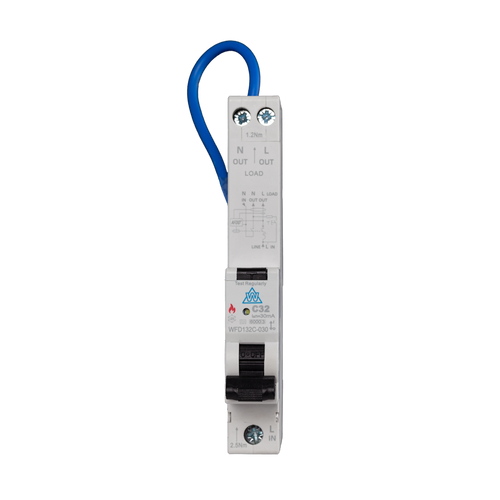
Arc Fault Detection A-Type RCBO – WFD106B-030 (6A, B Curve, 30mA)
£96.85
£145.99
The WFD106B-030 is a 6A, B Curve Arc Fault Detection (AFDD) RCBO, combining arc fault detection, residual current protection (30mA), short-circuit, and overload protection into a single compact module. Built to BS 7671:2018 (18th Edition) standards, it delivers the highest level of fire prevention for...
What Is an Arc Fault Detection Device?
An arc fault detection device (AFDD) identifies dangerous series and parallel arc faults caused by damaged cables, loose connections or deteriorated insulation. Unlike overload or earth faults, arc faults can generate intense heat without drawing high current – making them difficult for standard breakers to detect.
An AFDD disconnects supply when these hazardous patterns are identified, reducing the risk of electrical fire.
AFDD RCBO vs Standard RCBO
A standard RCBO protects against overload and earth leakage. An AFDD RCBO adds arc fault detection on top of this protection.
- RCBO: Overcurrent + earth leakage
- AFDD RCBO: Arc fault + overload + earth leakage
This makes AFDD RCBOs suitable for higher-risk installations where fire prevention is a design priority.
AFDD Requirements Under BS 7671
Under BS 7671, AFDDs conforming to BS EN 62606 are required for certain single-phase AC final circuits supplying socket-outlets with a rated current not exceeding 32A in higher-risk premises, including higher risk residential buildings, HMOs, purpose-built student accommodation and care homes.
For other premises, AFDDs may still be recommended or specified as part of the installation design where additional protection against arc faults is required.
Benefits of AFDD RCBOs
- All-in-one protection – arc fault, overload, and earth leakage
- Compact DIN rail fit – no special board required
- Futureproof – compliant with current and upcoming regulations
- Peace of mind – helps with EICRs, landlord checks, and insurance compliance
Featured AFDDs
- Arc Fault Detection A-Type RCBO (WFD1-B-030) – compact, DIN-rail AFDD + RCBO protection.
- Arc Fault Detection A-Type RCBO 20A (WFD120B-030) – ideal for lower-rated final circuits.
- Arc Fault Detection A-Type RCBO 32A (WFD132B-030) – suited to ring circuits and larger loads.
- Arc Fault Detection A-Type RCBO 40A (WFD140B-030) – for higher-demand or dedicated circuits.
FAQs on AFDDs
Are AFDDs mandatory in the UK?
AFDDs are required under BS 7671 for certain single-phase socket-outlet circuits not exceeding 32A in higher-risk premises such as HMOs, higher risk residential buildings, purpose-built student accommodation and care homes. In other premises, they may be recommended or specified depending on the installation design.
What standard do AFDDs comply with?
AFDDs must meet BS EN 62606, the recognised standard for arc fault detection devices.
Are AFDDs expensive?
They cost more than MCBs or RCBOs, but provide a level of fire risk protection not possible with standard devices – particularly valuable in rental and HMO compliance.
Why Buy From Power & Data UK?
We stock UK-tested AFDD RCBOs, backed by manufacturer warranties and next-day delivery options. Orders over £30 qualify for free shipping, with easy returns handled under our returns policy.
Related Categories
- RCBOs – overload + earth leakage protection
- High Immunity RCBOs – false-trip resistant
- Circuit Protection Devices